Who Shapes the Future of Psychedelic Healing?
On the Psychedelic Leadership Retreat, Black wisdom in the field, and the responsibility of where this work is held.
As the psychedelic field rapidly expands, a critical question remains: who is shaping its future, and who is still being left out of the conversation?
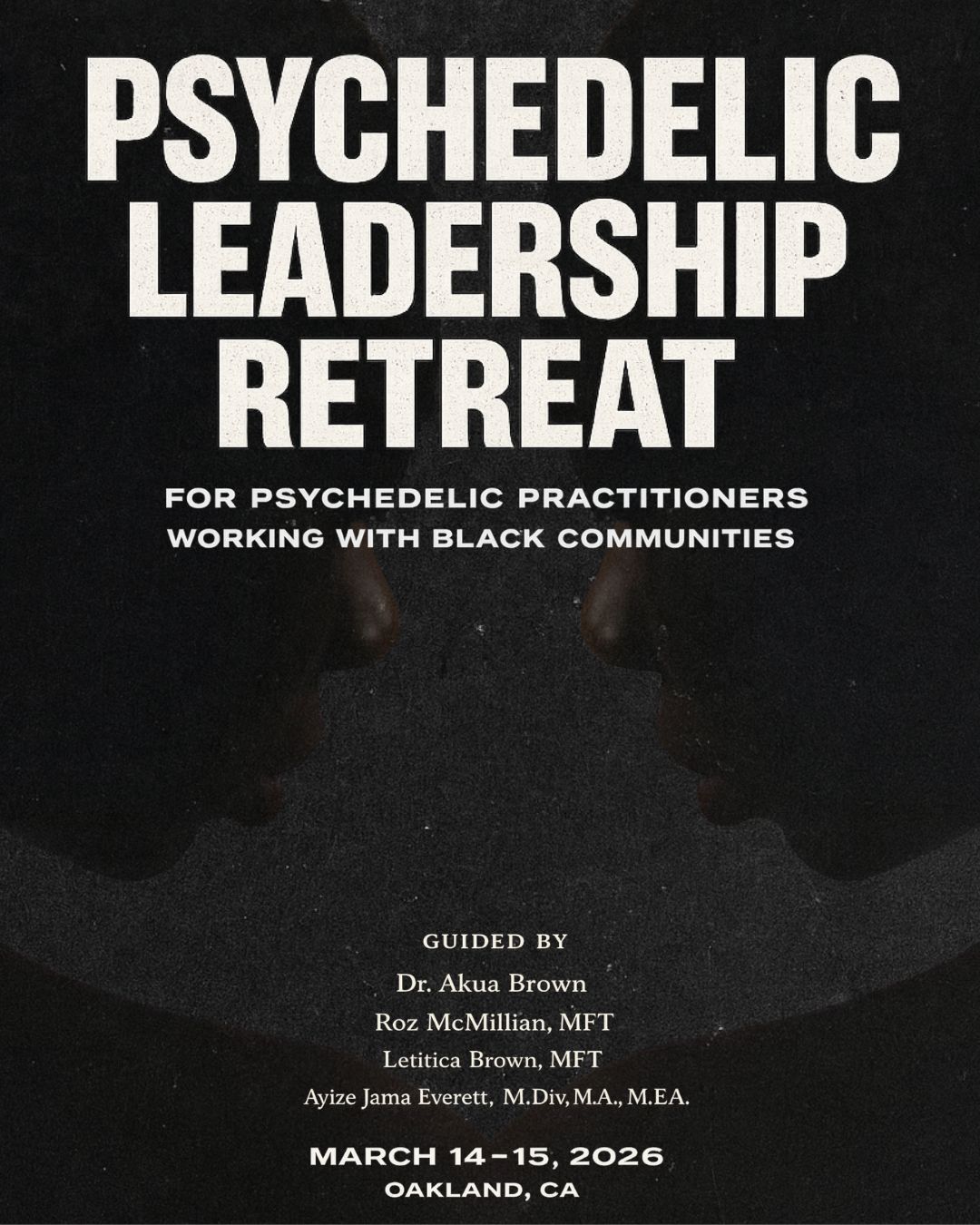
I am honored to have been invited to attend the Psychedelic Leadership Retreat in Oakland this March, a gathering focused on leadership in psychedelic spaces serving Black communities. This is not a traditional conference, but a leadership pipeline designed to cultivate practitioners, facilitators, organizers, and healers rooted in the communities they serve.
A leadership pipeline, not a conference.
The intention of this program is clear: to identify and nurture leaders already working with Black populations within the psychedelic space, while building self-sustaining networks and pathways for the future.
Rather than centering institutional authority, the retreat brings together people actively engaged in community work to learn from one another, alongside Black experts speaking directly to the realities shaping Black psychedelic experience.
In the United States, much of the existing clinical data does not meaningfully include Black participants. As a result, the knowledge we have about psychedelics and Black communities cannot rely solely on research trials. It must also be informed by community knowledge, ancestral wisdom, and lived experience.
Centering Black knowledge and expertise.
The retreat is guided by leaders whose work addresses specific and often overlooked intersections within psychedelic care: Dr. Akua Brown on Black physical health and psychedelics; Roz McMillian, MFT on Black recovery, substance use, and psychedelics; Leticia Brown, MFT on Black sexuality and psychedelics; and Ayize Jama-Everett, M.Div, M.A., MFA on Black spirituality and psychedelics.
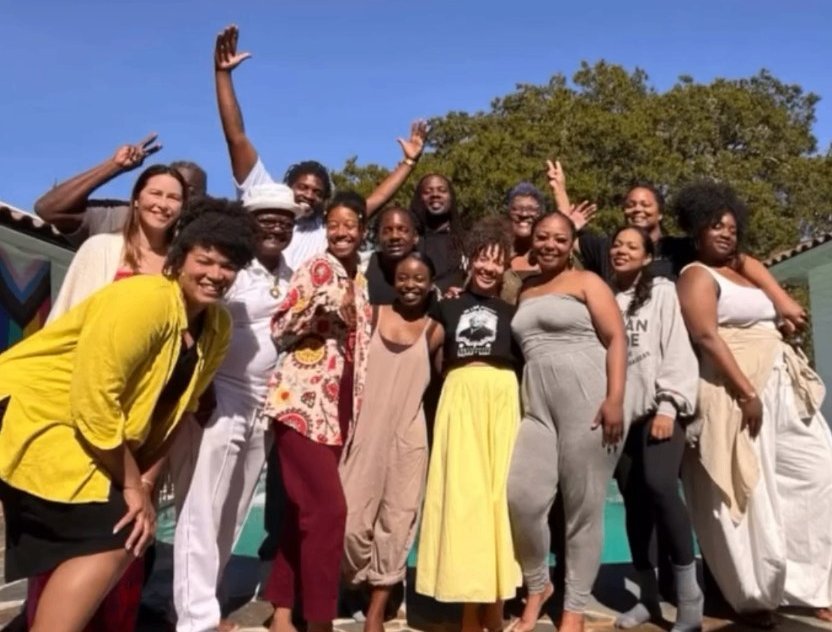
Together, these perspectives expand the field beyond generalized frameworks, grounding it in the realities, needs, and strengths of Black communities.
Why this matters.
The data we currently have does not fully reflect the lived realities, needs, or wisdom of Black people in the United States. This retreat is part of a broader effort to honor, amplify, and formalize knowledge that has long existed, but has not been adequately recognized within dominant systems of research and care.
As psychedelics move further into mainstream culture, the question is no longer simply whether these medicines will scale, but whether wisdom, stewardship, and access will scale with them.
Personal lineage and perspective.
My own path into this work has been shaped by a long-standing engagement with African history and anthropology, as well as the work of African American writers and thinkers, Claude Brown, Ralph Ellison, James Baldwin, and bell hooks, alongside contemporary voices like Ta-Nehisi Coates and adrienne maree brown.
As a first-generation Chinese American, I have also been deeply interested in how cultures carry wisdom across generations, and how those traditions can be honored with humility as these medicines enter new contexts. This perspective is not separate from my practice, it informs how I think about responsibility, cultural stewardship, and the ethical expansion of this field.
Rooted in the Bayview.
Today, IXCHEL Spiritual Clinic is based in the Bayview neighborhood of San Francisco, a historically Black community with a powerful legacy of organizing and resilience.
In the 1960s, Bayview–Hunters Point became a hub of civil rights activism, where residents organized against redevelopment policies and employment discrimination, with women playing a particularly strong role in community leadership. More broadly, the Bay Area has long been a birthplace of community-based healing movements, from the Black Panther Party's free health clinics to emerging models of grassroots care today. This history matters. It informs how and where this work is held.
Lineage, responsibility, and practice.
My work is rooted in the full arc of preparation, ceremony, and integration, and is deeply informed by my initiations in the Bwiti tradition in Gabon, where I have worked with the sacred medicine of iboga within a lineage-based framework of care.
That experience continues to shape how I understand responsibility, particularly as these medicines move into new cultural and institutional contexts. The question is not simply how to make these practices more available, but how to do so without losing the structures that make them meaningful, safe, and transformative.
Looking forward.
For me, that responsibility begins at the local level. Expanding thoughtful, culturally grounded access to healing spaces for underserved communities in the Bay Area is deeply important, and something I remain committed to building through IXCHEL Spiritual Clinic.
I am grateful to be learning alongside the leadership guiding this retreat, and to be part of a broader effort to shape a more inclusive and responsible future for this work. A special thank you to Reggie Harris, founder of Oakland Hyphae, for spearheading this much-needed gathering and continuing to create pathways for equity and leadership within the psychedelic ecosystem.